Data structured
around the process.
We design data storage, retrieval and access to suit the application's needs.
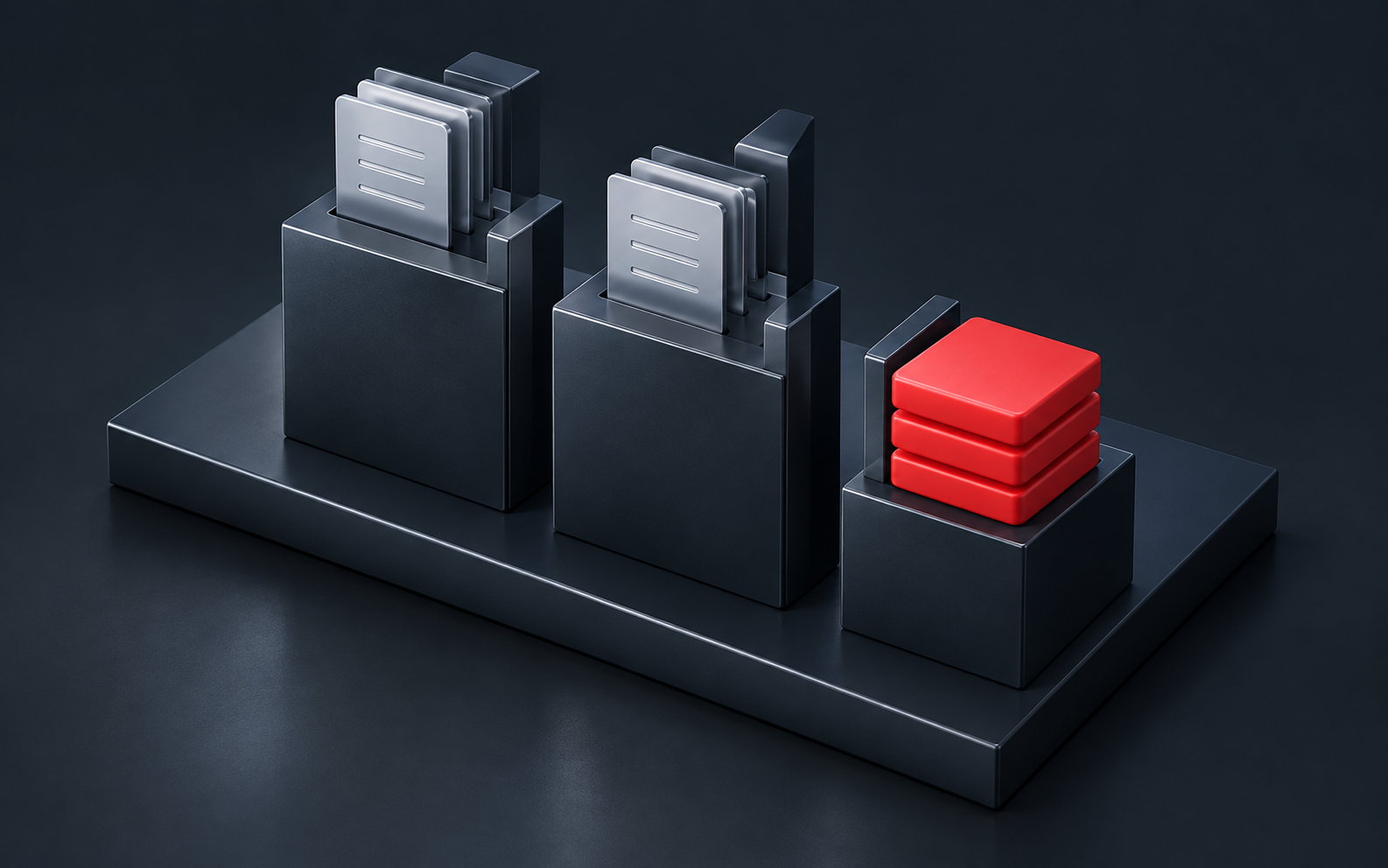
PostgreSQLMongoDBRedis
Not all information needs the same modelDifferent data,
Different data,
different needs.
We choose technology to match how the product stores and uses information. Relationships, documents and caches serve different purposes.
Document model
Flexible structureMongoDBCache and short-lived state
Quick accessRedisData model exampleThe same record.
The same record.
Three representations.
An example of a single order. This is not a recommendation to maintain the same data in all three databases.
Order #10293
- Client
- Anna Kowalska
- Status
- Paid
- Total
- 399,00 PLN
- Process owner
- Sales team
Relationships — PostgreSQL
zamówienia
id · 10293
klient_id · 15
status · paid
total · 399.00customers
id · 15
first name · Anna
surname · Kowalska
zamówienie_id → zamówienia.idpozycje_zamówienia
zamówienie_id · 10293
produkt_id · p1
quantity · 1
Related records, consistency rules and transactions.
Document — MongoDB
{
  "_id": "10293",
  "klient": {
    "imie": "Anna",
    "nazwisko": "Kowalska"
  },
  "pozycje": [
    { "produkt": "p1", "ilosc": 1 }
  ],
  "status": "oplacone",
  "suma": 399.00
}
Information collected in a document designed for easy reading.
Cache — Redis
KEY order:10293:summary

VALUE
{
  "status": "oplacone",
  "suma": 399.00
}

TTL 3600 seconds
Example summary with an expiry time. It does not replace the source of truth.
One process.
Three uses.
We connect tools when their roles justify it. A simple project may need only one database.
Backups, permissions
and recovery.
Data needs more than a good model: it also needs access control and a tested recovery plan.
- Roles and permissions
- Regular backups
- Disaster recovery test
Pre-migration model
We analyse the current model and dependencies. We plan the change, consistency checks and the ability to roll back safely.
Current model
- Shared database
- Current constraints
- Existing integrations
- Risks of the change
Target model
- Agreed requirements
- Tailored structure
- Data transfer plan
- Acceptance criteria
Questions about data
When should I choose PostgreSQL, and when MongoDB?
We analyse the information structure, relationships, transactions and how data is read and changed. Relational and document models address different needs; the choice requires product context.
Can a cache replace a database?
A cache usually stores selected information that can be recreated from the source. In this example, Redis speeds up summary reads; it does not take responsibility for saving the order.
What does the data migration process involve?
We start with an inventory, backups and a trial transfer. We check relationships and data completeness before planning the actual switchover and post-change checks.